
Connect with people isn’t always easy. It could be hard to trust others, feeling as though you’re not likeable or interesting enough. Sometimes it’s a power dynamic where you let someone confine you into a mold, who they want you to be so they can feel desired. And all in the name of wanting to feel like you belong. But this usually leads to feeling like we don’t add up and we doubt our self worth. It’s also unhealthy. Lose, lose.
From my experience being afraid to connect usually leads to feeling like you need to buy belonging. Also no bueno. So if you can’t buy belonging, and you won’t feel good if you control others, or be controlled to feel approved of, how do we come together in healthy ways? I think it starts with being around the people that want to be around you, accepting you for who you are. I did this by making pies.
Making Friendship, Making Pies
I used to work at an apple orchard that I’ve been going to since I was a child. This was an experience I treasure, and also gave me a lot of experience in making pies. We had something called “pie crew” at the orchard, where six or seven of us would go to work after we closed and make hundreds of pies in one night. It was a lot of fun, and we had a good crew. We joked, told stories, ate cider donuts and drank cider. So I took that pie making knowledge and experience and the surplus rhubarb in our garden, and decided to make pies for my neighbors.
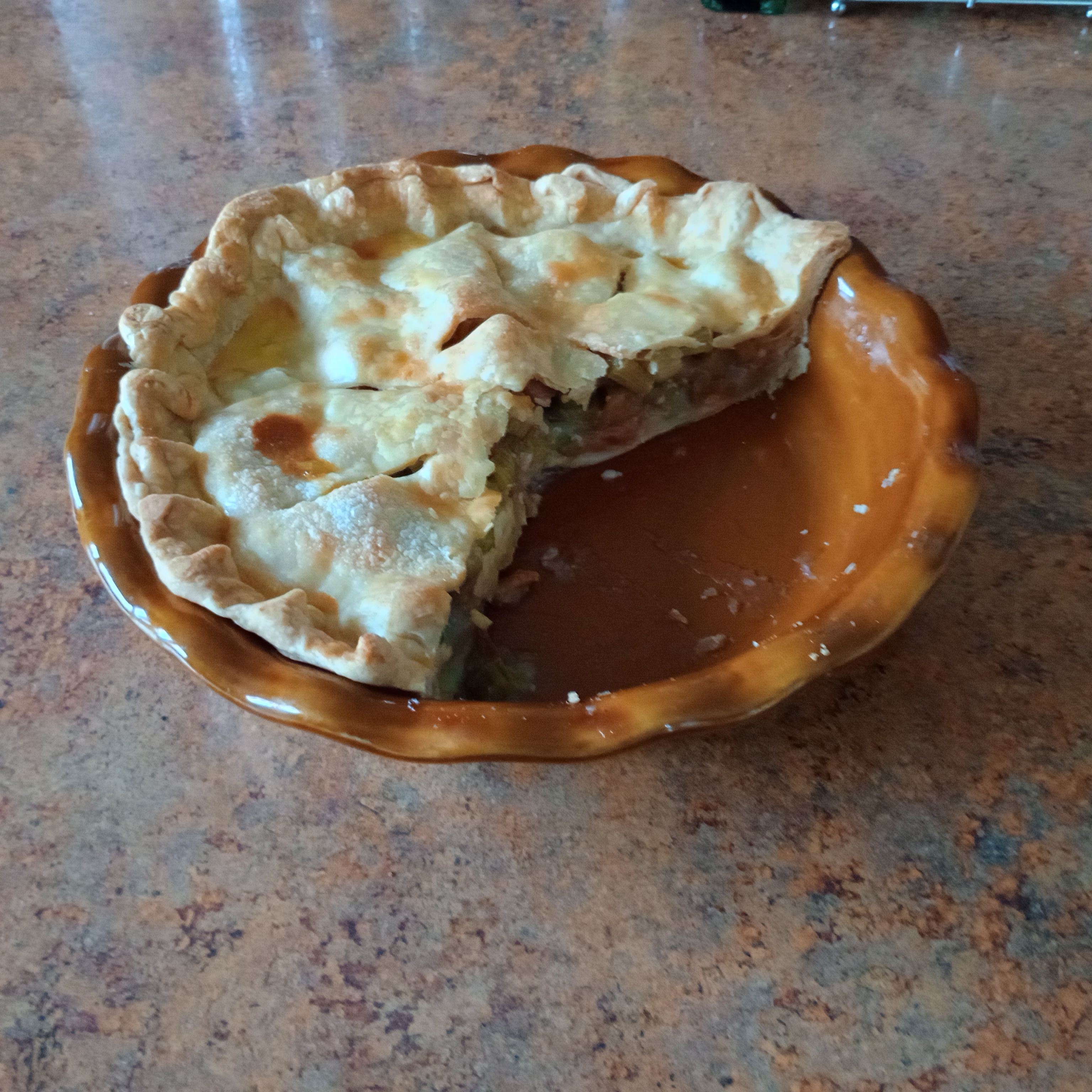
I made three. One for us and two of the neighbors. The first pie I gave was to a couple that had just moved in next door. They were grateful for the pie and it was a nice way to welcome them to the neighborhood with a homemade gift. Building the foundation for our friendship on generosity and baked goods, win, win. We talked for a while and we both felt a little more comfort in having shared some food and kind words.
The other neighbors were a young family with two small children. They’ve been in the neighborhood for decades, but I hadn’t talked with them much in the past. It was 9pm when I dropped off the pie, a little late, but they were also grateful. Everybody enjoyed the pies and our new neighbors felt welcomed, and my connection with the others grew just a little deeper.
But what about the friends you have a history with? I think we need to evaluate our friendships in order to know who will be there for us no questions asked. And it starts with chasing and being chased.
Stop Chasing the People Who Can’t be Your Friend
This seems like a no-brainer, but from my experience we try to change the minds of the people who could care less about us. We think that if we can change their mind about liking us, we will finally feel accepted, whole and loveable. Like we have something to prove and they are the judges of our approval. But this just isn’t the case. If you go down that road, you end up chasing people who are basing their value on how many people are chasing them. And they need you more than you need them. My guess is that they think being revered and keeping their groupies just out of reach will give them worth because they’re desired. So if they want to use you to make themselves feel wanted, why bother?
Change of Perspective, Change of Dynamic
Once you see the game that the people who are ignoring you are playing, and how it’s not worth your time, then you free up your energies to focus on the relationships that do matter. But try not to be angry or resentful of the people unwilling to foster a genuine connection. Think about them as being unable to foster authentic friendship. Then you can let go of the anger that will just end up leaving you feeling hollow inside and see them as insecure and in need of empathy. Then you can take back your power and self worth. You can see them for who they really are, someone who’s just trying to figure out the same things you are, and were keeping you around to feel validated that they have worth. So where do we start to build the friendships that truly matter? My intuition says, start with who is already around you.
Who Is Trying to Connect with You?
I was mean when I was younger. I acted superior to my friends and consequently ignored a lot of people who were trying to be my friend. Good people. People who had been there for me from the start. But I was trying so hard to be liked by those who I thought held the key to my belonging, the cool kids, that I pushed my most loyal friends away. All because I thought I was “above” them by virtue of them wanting to be around me. I was too busy trying to looking cool and act superior for the cool kids approval, not realizing that I was already approved of by the people I was ignoring. But I forgot why I was acting superior to begin with, to feel belonging. And the people I was chasing seemed like they wanted nothing to do with me. But they were just as afraid as I was and we were all too proud to admit it.
I was acting superior because I was afraid of being rejected by the “cool kids”. I thought if I was with the people who actually wanted to be with me, I would be seen as pathetic, weak and needy, because that’s how I saw them for wanting to be around me. I rejected them because they were rejected by the “cool kids”, and I didn’t want to be pathetic by association. Because their rejection mirrored mine, and I was avoiding those feelings altogether.
But once I figured out that needing people and feeling rejected isn’t uncool, pathetic or weak, I saw that the friends I had that I thought looked “needy” or “pathetic”, were actually my most dependable, reliable and my kindest friends. And it sounds cliché, but they were also the strongest friends for not running from their emotions. And what I’m looking for in my friendships now is kindness. And I’ll add reliable. People who will be there when I need them, even in, and especially during the difficult times.
How to Recognize a Good Friend
First, I had to reevaluate my friendships using my new criteria. I started by seeing who had been there for me in the past. Through the good and bad times. Because sooner or later trouble will come a knockin’, and you’ll need a friend that will do you a solid by calling an ambulance after your shoulder dislocates in the middle of the night, and put pants on you because you sleep naked (thanks Jon:).
And I consider myself blessed with the friends I’ve made through the years, because even after I’ve ignored them, some for decades, they’re still here for me. No questions asked. And that is what a good friend looks like, forgiving and understand. Who know that you don’t just throw people away. So what are some of the traits of a good friend? Or how do we spot them after we’ve change our definition of what a true friend is? One of the ways that I’m doing this is by holding space.
Holding Space
I’ve heard people talk about holding space before, but I didn’t quite understand what they meant. I was also pretty dissociated from my emotions, so first I needed to recognize what emotion I was feeling. But when I got a handle on that I had a come to Jesus moment over breakfast with a new friend. I realized that holding space meant space for the other person’s emotions and mood.
The day we had breakfast I was in a terrible mood. I had just been turned down for a job I was sure was mine. I had a scowl on my face and was acting curt to everyone within yelling distance. I had agreed to meet my friend for breakfast the day before, suggesting a place in my hometown and where he’s a regular.
I could tell he was uncomfortable by how upset I was. Checking his phone, looking side to side anxiously. I felt terrible that I was causing him discomfort, but didn’t know how to stop acting anxious without stifling my emotions. My old default for handling difficult feelings. But he stayed. He stayed in the discomfort and the tension that was between my tea and his Irish benny and allowed me to feel these difficult feelings without asking me to change or to stuff them. Then later that day, he asked if I wanted to go see a movie.
That’s what I believe is meant by holding space for someone: Staying and not asking the other person to be different. Even when it’s difficult or uncomfortable, and still wanting to hang out with you afterwards.
Listening
Another quality of a good friendship is listening. What I’ve found in my relationships, including with myself, is that when I feel heard by my friends, I feel a tighter bond with them. We understand eachother better and that is a gift. The mark of a true friendship.
I think we stop listening because we are hyper focused on how we want to be received. What Brené Brown calls “hustling for your worthiness“. I’m not sure the reason. Maybe we’re starved for attention? Or trying to convince the other person to see us for how we think they want us to be so they’ll accept us? And I think we stop listening to our friends, which stifles our connection in the prosses. This is because we let the fear of not being heard and seen take the wheel. And if we’re afraid of not being heard, we’ve most likely stopped listening, or are listening to what the fear is telling us to do instead. Because when we’re afraid we’ll say whatever we think we need to. And listening is the other half of feeling heard.
Kindness
This is an important ingredient for friendships, or any relationship for that matter. Without kindness, you can’t establish trust. And every time you are unkind to your friends, it’s a wounding. Sometimes big, sometimes small, but a wound none-the-less. And if you keep wounding eachother, you’re bound to reopen old ones leading to resentment. We inflict new ones as well, causing layers of traumas. And if you don’t acknowledge them and forgive eachother, you’re left mangled from the hurtful experiences. It’s like being in a train wreck.
Being kind helps to build trust, which in turn leads to connecting with ease and feeling safe with eachother. When you’re kind to your friends, you’re saying, “I recognize you, I appreciate you, and acknowledge that you’re great, enough, just as you are”. And I think this is all anyone wants to feel, from their friends especially. To be seen for who we are and accepted without agenda.
So if you’re looking for a way to create some tighter bonds with your friends, get out the mixing bowls and start in the kitchen. This is the recipe I used to make the above pies for my neighbors. I hope you enjoy it. Peace & thanks for reading 🏔️🌙🕯️🥧
Rhubarb Pie

Prep Time
20 minutes
Bake Time
45-50 minutes
Serves
6 (one pie)
Ingredients
- 6 cps Chopped rhubarb
- 1/4 cp Cornstarch or 1/2 cp AP flour
- 3/4 cp Sugar
- 1 Tbsp Lemon zest
- 1/2 Tea Powdered Cardamom
- 1/2 Tea Salt
- 2 9″ Pie crusts, store bought or homemade
- 1 Egg
- Cooking spray
- (Optional: Sugar to top with cinnamon or vanilla sugar)
Steps
1
Preheat the oven to 375°. Remove the two pieces of pie dough from the refrigerator. If using home made, let rest for 10 minutes before dividing and rolling out each piece to about a 13″ diameter circle.
2
Rinse and chop the rhubarb to bite size pieces. Add to a large mixing bowl with the sugar, lemon zest, cardamom, salt and cornstarch or flour. Mix until combined and set aside.
3
Grease the bottom of your pie dish with a thin layer of oil or butter. Take your pie dough and drape it over the pie dish, making sure to have a little hanging over the edge for crimping. Gently form the bottom pie shell to the bottom of the dish, being careful not to tear it. If you do tear the dough, stretch the torn edge over the other side of the tear, and using a bit of egg wash gently press one edge of the dough into the other edge.
4
Add rhubarb filling and spread it evenly around the bottom of the dish, adding all the liquid that’s at the bottom of the bowl with the fruit.
5
Unroll and place the second pie dough shell over the filled pie, lining up the edges of the top dough to bottom. Crimp by pinching the two shells together along the rim of your dish between your thumb and forefinger, forming a ridge of dough between your finger and thumb. Then place your thumb in the divot made previously by your forefinger, and pinch in the new dough with your forefinger together with your thumb creating another ridge. Repeat this process around the entire rim of your pie dish until the entire pie crust is crimped.
6
Beat the egg, adding a splash of water to thin. Using a pastry brush, or paper towel in a pinch, brush the entire top of the pie and cut 8 to 10, 1″ slits on the top of the crust.
7
Top with desired flavored sugar if using, place on the middle rack of the oven, and bake at 375° for 45-50 mins. until golden brown. Let cool and serve.


Leave a Reply