
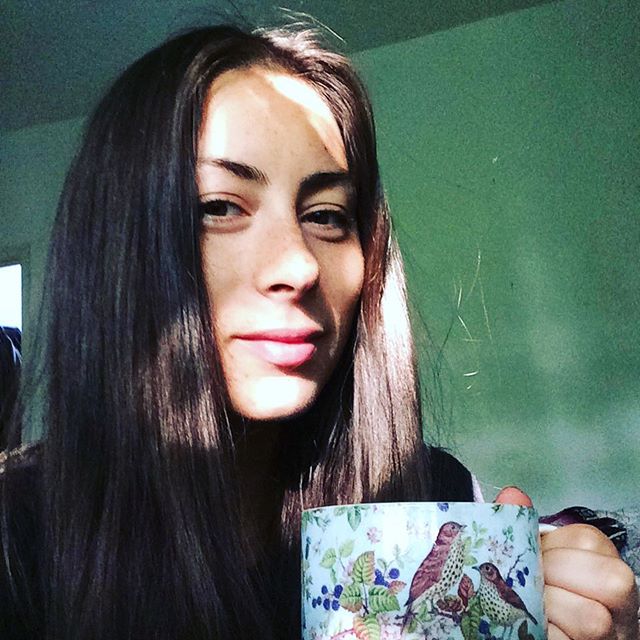
This one goes out to my niece. I know how tough it can be, but Keep Ya Head Up : )
I got the inspo for this post after a long day at work talking to strangers. I’m in the food industry and I was tending the window at a large coffee chain. Part of my job is to create the “experience” of selling belonging to customers. Something I made fun of in my youth, and it’s still not something I can fully get behind. Only now it’s for different reasons. Let me explain.
Mean Girls Are Mean For A Reason
I’ve said before that I was raised in a house full of women. Mostly image obsessed where everything was a competition and there was enough spite being thrown around to created our own professionally ranked sport. But it wasn’t without reason. One of the subjects of our ridicule was meatloaf (the food, not the singer).
My grandmother, Grandma Pat, was a model in the 50’s. She got it in her to try out a new meatloaf recipe. She read somewhere that putting raisons in meatloaf would be a non-traditional take on an old stand-by. So she tried it, served it, and was ridiculed by our entire family for years to come. Possibly still. I remember not liking it then, but I was a kid. I didn’t like anything that was new, or not slathered in katsup. If I ate meat now, I’d probably enjoy it. And there’s an Indian dish I remember liking that’s similar, lamb korma.
Having Empathy For The Mean Girl Who Puts Raisons In Meatloaf Goes A Long Way
I thought about the meatloaf on my way to grab a bite and I felt bad for her. For context regarding the level of Pat’s meanness, she once slammed my thumb in a car door, then walked away while I was screaming. For all intents and purposes I should be happy with her ridicule. And I used to be in my youth. But when I got to the restaurant, sat down and relaxed a little, I saw it from her perspective. What if she was just trying to impress us? Make us happy and try to put an end to the ridicule?
This makes me sad to think about. What if she put herself out there, tried to do something that would make her feel good about herself, something grandmotherly, and hopefully bring us closer together, only to be torn apart for sport? Of course we were hurting too. From a battery of past abuses dispensed from her tongue. And she had a sharp one. There’s a Peter Tosh song which illustrates our family, “Stepping Razor”. The hook is, “I’m like a stepping razor, don’t you watch my size, I’m dangerous”. Yep. But she was brave enough to try to brake tradition, and when she did we sent her the message that it was not Ok to be nice. Not Ok to try new things or change. So we hurt her. And again, the cycle of abuse continued.
An update on my family, most of us don’t talk to, or like each other very much. They live mostly secluded and untrusting lives from the resentment we’ve nurtured and we definitely don’t feel a sense of belonging to one another. We also don’t talk about it. So there’s that too.
Our Brand Of Family Disfunction
Our usual family gatherings were loaded with tension. But what made this so maddening was that we all ignored it. We would cut each other apart using our sharp tongues with an air of self righteousness superiority. Business as usual. But everyone was scared and hurt, on edge, and traumatized, waiting for the next cut. If you’ve ever seen the movie “Rosemary’s Baby”, you’ll understand the tension I’m talking about.
In the movie there was a pregnant woman being taking care of by her family and neighbors while she was waiting to give birth. On the surface everything seemed pretty normal. Except that those supporting her were actually Satanists, and she was going to give birth to the antichrist. The tension and fear underlying every interaction, every word was ineffable. This was not dissimilar to what my family dynamic felt like. But our situation was not a unique one.
The Feminine Mystique, The Reason Mean Girls are Mean
Betty Friedan’s, “The Feminine Mystique” tackles this issue. It’s about the power of a woman’s charm is that she is expected to submit to a form of indentured servitude to men and societal expectations, while sacrificing her freedom, all the while trying to gain some semblance of control via manipulation. AND were always willing to help others with a smile.
Our family culture gave in to what Friedan explained was the social norm. This bred resentment, and we were forced into these roles, surreptitiously foisted upon us. We didn’t know how, and were too afraid to break tradition to be ourselves. I.e. free from other’s expectations of us. But like Rumi said, “Why do you stay in prison when the door is so wide open?”.
Below is a scene from the film, “Mean Girls”. In the scene the antagonist played by Rachel McAdams tells Lindsey Lohan’s character to, “get in loser, we’re going shopping”. The values that are being touted in this scene are that the leader of the mean girls (McAdams) has what the others want: confidence in who they are, and belonging by knowing what to wear and how to act. So they do what she tells them to be like her, to be liked by her. But what McAdams is really doing is pushing people away for fear of being hurt and judged. And what her friends don’t realize is, that McAdams doesn’t feel belonging to herself. So how could she accept others if she doesn’t know what acceptance is? They’re just pushing each other away while frantically searching for what will make the other accept them, mostly in the form of what’s in McAdams’ shopping bags.
McAdams, like my grandmother putting raisons in her meatloaf, wants to feel accepted by her friends. But she was grasping at what she wore, how sexy she looked, and how stupid she made others feel, all to look better than everybody else. It’s all for show. And those who have the money and resources have it the worse. They insulate themselves from others by buying things they don’t need, but will make them look trendy, desirable. But they’re really hiding behind a wall of cash and style. None of the bueños.
How Others Treat You Is Dictated By How You Feel About Yo’self
How Others Treat You
This seems like a no-brainer, but can be elusive. Because we’re afraid to be our authentic selves for fear of being rejected. Like McAdams holding the key to others belonging, you’re making decisions from a fearful place of rejection. You’ll compromise your self-respect to the alter of fitting in. Lohan did this to feel the cold comfort of McAdams’ conditional acceptance via taking abuse to feel one of the crowd. But if you’re sacrificing what you intuitively know is right, being loved for who you really are and not who you’re told to be, than you not only don’t belong with your “friends”, you don’t belong to yourself. Lose, lose. So how do we break this cycle?
How You Feel About Yourself
This isn’t as easy as you think. Once I learned how to listen inwardly to my emotional states, that’s when I understood what I felt, and then how felt around others. I felt belonging to myself. As Peter Bjorn and John put it in their song, “Objects of My Affection”, “I am more me”. And once you understand the ebb and flow of how you feel in your relationships, you’ve learned to take care of yourself by removing yourself from the people and situations that hurt and are abusive. That’s when you start building boundaries.
This is how you learn to treat yourself with dignity. And when you learn how to move through life with dignity, the people who will try to tear you down to feel better than you in some way, to make themselves feel better than you, won’t matter. Because feeling superior does not make you a better person. Quite the opposite.
Don’t Let Them Beat You Down
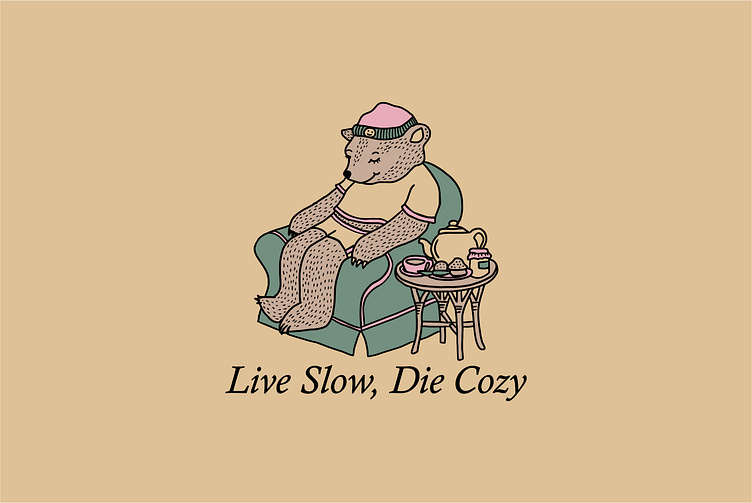
I’ve known poverty. I was almost homeless four or five times, I’ve swallowed my pride and went to the food pantry when I didn’t have enough money for groceries even though I was living with family who had the resources to help support me. I’ve known job instability and have been fired from 15 or so jobs. I’ve known discrimination. Most recently I was called racist for posting this sticker in a previous employer’s group chat, then verbally assaulted by the head of HR, my program director, and nine or so other higher ups, even after I apologized four times. All because I tried to create healthy belonging.
I also know what it’s like to work at a job where I was earning well under my potential. With a BA from a good school I was making less than 40K a year to service my $136K debt, without savings or support. Without a car, relying on a combination of public transportation and my feet. One commute was an hour and a half one way and started at 4am. I still prefer the bus to the train because the people who ride the bus may be poor monetarily, but not in connection. It feels like a family gathering on a busy bus. People talking and interacting, while the train feels cold, quiet, and empty, even though you are surrounded by people.
You Find Love Through Mending Fences
This was something I learned recently. After I ended my marriage and when I stumbled into the $136K worth of debt, I lost most of my friends and had to clean up my act. I.e. the mess I made as Dave Ramsey puts it. In doing so learned how to live my life right by clean the mess I made and by building something better. “Right” for me looked like building healthy relationships and learning to love the process of cleaning, the lessons you learn and the healing that ensues by mending your fences. This is what makes us stronger. The journey. The challenges overcome and pain we’ve endured but made right. And when you learn to love the work, that’s when you really begin to thrive.
Be Around People Who Are Good for Your Mental Health
When you start paying attention to how you feel, you’ll know who is good for your mental health. For example, after a difficult volley of emotions, taking time and space to check in with how you’re feeling and ask yourself, “do I need to reenforce a boundary?” This may take some time, but you’ll get the hang of it. And when you feel belonging to yourself, that’s when it’ll become second nature, and you can focus on building healthy relationships.
Building Your Boundaries, Standing Your Ground
Boundaries also seem like a no-brainer. But every one of the people who abused me above showed me how to build my boundaries by me refusing to take their abuse. I now know how to stay true to my values and how to talk about my feelings. And I also know when to walk away.
For example, during the meeting where I was verbally abused and falsely accused of being racist, the person I offended was not present, and even after they bullied and terrorized me for 45 minutes, with only my useless union rep by my side (thanks Ted), who told me this is how these meetings are, I held close my values.
I told them I was terrified during the meeting, so scared from their verbal assault that I was literally shaking. And when all was said and done I held myself with dignity, telling them I was disappointed with their behavior, and walked away feeling proud that I could withstand their abuse and come out knowing I didn’t let them turn me into a version of myself I wouldn’t like. Like them, and they were visibly uncomfortable after I stood up for myself. I also felt relieved knowing I don’t work for a company who treats their employees the way they treated me. That’s real strength. There’s a poem that illustrates my sentiment, “Flower work is not easy. Remaining soft in fire takes time.” -― Nayyirah Waheed, salt.
Mending with Intension
Cultivating relationships was something I was terrible at. So I had to learn how to maintain healthy relationships and the boundaries that go with them. This was easier than you may think. But first I had to learn and put into practice my new boundaries. This meant I had to understand MY value(s) and self-worth.

This is a list of my friends and family. The ones I’m texting once a week to check in. Some are old friends that I lost touch with, some are family, and as an INTJ I like applying structure to my ideas and projects like this list. It helps me cultivate the positive traits I want to build and apply them into how I’m deciding to live my life. But this wasn’t always the case.
How do Those Closest to You Describe You?
I once described a lover as feeling like an open wound. I also had another lover describe me in the same way. What was being said was our willingness to be vulnerable. To show me they were hurt and me them, and trust that we wasn’t going to abuse each other on purpose, out of fear of rejection. Because their hurt, any kind, reminded me of how I felt hurt. And nobody wants to be reminded of our pain. So staying in our pain together, and trusting that we won’t do it again maliciously, is about the bravest thing we can do. Like how I was able to walk away with my dignity after being abused by all those people trying to strip me of it. I was brave enough to show my hurt, my wounds, and not inflict pain in retaliation. And the people willing to be brave enough to be honest about how they’re hurting, how if I hurt them unintentionally and they not hurt me in return, those are the people I’m choosing to keep company with. Because we will hurt each other. The question is, is it intentional.
How You’ll Know
There will be patterns. You’ll have an interaction with a person, probably very close to you, one that keeps coming up, and you’ll be able to connect that person to how you’re feeling. The situation and subject of your conversation and the overall context, will all come together and you’ll see how they affect your emotional state. Trust yourself and how you feel and you’ll be fine. That’s when you’ll feel authentic belonging to the ones you love and who love you, but more importantly to yourself. I’ll leave you with a song that helps me, and a reck from a good friend. If you’re ever in doubt, listen to your heart : ) Thanks Jennie. Peace, & thanks for reading 🏔️🌙🕯️🌧️💜💙
Image Credits: “That smug feeling when it’s 9.15am and you’ve already practised at @stretch_london with your sweat buddy @joshua_preston and taught a yoga class to your amazing #wearesocial yogis. Today’s going to be awesome! 😊 #yoga” by We Are Social is licensed under CC BY 2.0.
Leave a Reply